Massive anti-terror offensive intensifies in Rajouri as ‘Operation Sheruwali’ enters sixth day
These terrorists had managed to flee after a brief encounter with security forces on 23 May.
Retired paramilitary officers have raised concerns that the proposed CAPF Bill could affect implementation of a Supreme Court verdict aimed at improving promotion opportunities for thousands of cadre officers.




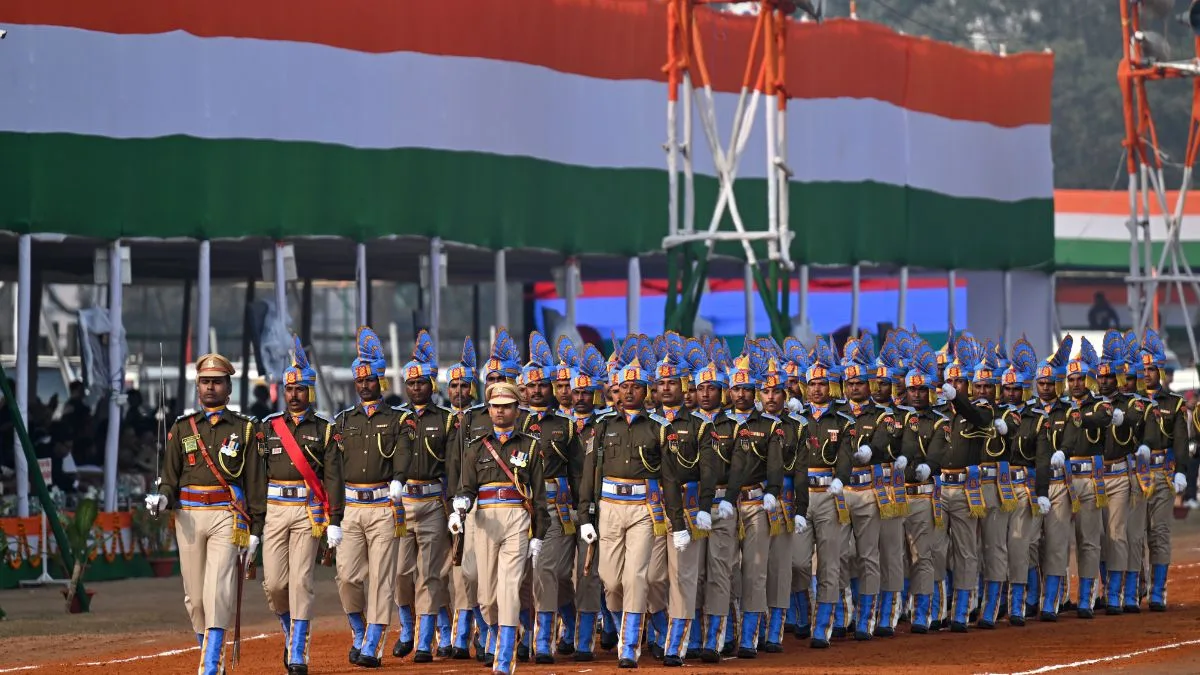
CRPF personnel march during the Republic Day parade at Gandhi Maidan in Patna on January 26, 2026. Retired officers have raised concerns over the proposed CAPF Bill and its impact on promotions. | IANS
A proposed law governing India’s Central Armed Police Forces (CAPFs) has triggered concern among several retired officers, who say the move could weaken a recent Supreme Court judgment meant to improve career prospects for thousands of cadre officers.
The controversy comes as the government is considering the Central Armed Police Forces (General Administration & Regulation) Bill 2026, which retired officers believe could alter how senior posts are filled in the paramilitary forces. CAPFs, including the CRPF, BSF, CISF, ITBP and SSB, together deploy nearly 10 lakh personnel and play a critical role in guarding India’s borders, protecting strategic installations and conducting counter-insurgency operations.
Advertisement
For years, officers within the Central Armed Police Forces have watched many of the top positions in their own organisations go to Indian Police Service (IPS) officers on deputation. Cadre officers, who spend their entire careers serving in these forces, have long argued that they should have a clearer chance to rise to the highest ranks themselves.
Advertisement
The issue eventually reached the Supreme Court. In a ruling delivered on 23 May 2025, the Supreme Court backed CAPF cadre officers, saying they should be given the same status as other organised Group A services in the government. The court also said that senior posts, up to the rank of Inspector General, should, over time, be filled by promoting officers from within the CAPFs themselves. A review petition filed by the government was later dismissed in October 2025.
SK Sood, retired Additional Director General of the Border Security Force (BSF), said the government is presenting the legislation as an administrative reform, but officers see it differently.
“The proposed bill by the government is supposedly aimed at bringing administrative reforms in the CAPFs,” he said. “However, this is only a euphemism for the continuation of the domination of IPS officers at higher levels.”
Sood noted that cadre officers had fought a lengthy legal battle that culminated in a favourable Supreme Court ruling recognising their rights. The government, he said, had earlier indicated that it would implement the court’s decision.
“The government, in their press briefing in July, had announced that the cabinet had taken a decision to implement the SC order and give all benefits of ‘organised Group A Service’ at par with all other services,” Sood said.
According to him, this included filling posts up to the rank of Inspector General through promotions within the forces and granting non-functional financial upgradation, a system meant to reduce stagnation in government services.
However, he said the government later filed an appeal, which was rejected by the Supreme Court.
“Introduction of this bill is disheartening and demoralising to over 12,000 officers of these forces,” Sood said.
He also questioned the continued deputation of IPS officers to the CAPFs.
“Continuation of IPS officers in these forces is also a serious compromise with the national security, as they have no connection with ground-level issues, operations philosophy or ethos of these forces. Besides this, they come to these forces for a short-term deputation and are unable to grasp the festering issues of these forces.”
Sood argued that instead of enabling reforms mandated by the Supreme Court, the bill could hinder them. “Details of the bill must be put in the public domain to enable a detailed scrutiny, besides calling the affected parties to present the entire gamut of issues involved,” he added.
Retired BSF Inspector General MS Malhi said the Supreme Court judgment was the result of a long struggle by CAPF officers seeking professional recognition within their own forces.
“The Supreme Court judgement is the culmination of decades-long struggle of CAPF cadre officers to bring professionalism, domain expertise and strategic thinking in the higher echelons of all CAPFs,” he said.
Malhi said implementing the ruling would allow leadership to emerge from within the forces themselves.
“The implementation of this judgement will bring in home-grown leadership in all CAPFs, will raise their morale and help in further strengthening the national security,” he added.
A serving officer, who did not wish to be identified, also stressed the importance of respecting the court’s ruling.
“Institutional power should never override judicial authority,” the officer said. “The 23 May 2025 Supreme Court ruling must be respected.”
HR Singh, former Additional Director General of the Central Reserve Police Force (CRPF) and president of the Alliance of All Ex-Paramilitary Forces Welfare Association, said promotion delays have long affected cadre officers.
Singh, a 1975-batch officer who served for nearly four decades, including in the National Security Guard, said the problem is particularly severe in some forces.
“I retired as ADG in June 2013 after serving for over 38 years in various operational theatres in various capacities. I also served for 6 years in the elite force, the National Security Guards, and for over 2 years as Director of the CRPF Academy. In a batch of 34, only 2 officers were able to reach the level of ADG.”
“Likewise, our 13,000 cadre officers of CAPF have been facing stagnations at various ranks, and the situation in CRPF & BSF is worse, as even after putting in 16 years of service, the Assistant Commandants have not even got the first promotion to the rank of Dy Commandant, whereas the officers of the 2012 batch of IPS with even lesser service, i.e., 14 years, are joining CAPF as Deputy Inspector General of Police. This situation is quite demoralising for our cadre officers,” he said.
The legal battle over promotions, Singh said, lasted more than 13 years before the Supreme Court delivered its verdict on 23 May 2025, ruling in favour of CAPF cadre officers. A review petition filed by the government was later dismissed in October that year.
When the judgment was not implemented within the expected timeframe, officers approached the court again.
“When the Ministry of Home Affairs did not take any action within the time frame of 6 months to implement the judgement, our officers filed a contempt case, which was heard on 10th February and 10th March 2026.”
During the hearing, he said, the government indicated it was considering bringing the statutory intervention.
“It has been learnt that the cabinet has approved the CAPFs (General Administration & Regulation) Bill 2026, which is likely to be put up during the current budget session of the Parliament just to nullify the Apex court’s judgement,” Singh said.
He urged the Prime Minister, the Union Home Minister and the leadership of the CAPFs to implement the court’s ruling.
“The future of about 13000 cadre officers is not adversely affected. This is a matter of national security, as CAPFs have been guarding sensitive Indo-Pak, Indo-Bangladesh, Indo-China and Indo-Nepal & Bhutan borders, as well as the internal security, the security of all high-risk installations and VIPs.”
Introducing legislation without wider consultation, he argued, could have serious implications.
“Now when the world is passing through a very uncertain and unsecured geopolitical situation, such a bill should not be introduced in haste in Parliament without being referred to the stakeholders and without being referred to the parliamentary standing committee on home affairs for wider discussions. The CAPFs are professional forces; their officers have given supreme sacrifices for the nation, and a large number of their officers sustained severe injuries, losing limbs while facing the gravest threats from the foreign terrorists and Naxals. The PM and the HM have been full of praise for their remarkable dedication and professionalism on many occasions. The HM has declared 31st March 2026 as Naxal-free India based on the prolonged operations conducted by CAPFs.”
“It seems to me that Hindus are not insecure, but CAPFs are,” Singh added.
Advertisement